The Real State of AI Website Builders for Small Teams
By 2026, AI-powered website builders have moved from novelty to necessity for small businesses. But not all tools deliver equally, and choosing the wrong platform can cost you thousands in wasted subscriptions and missed sales. Here's what actually matters when you're evaluating AI builders for your 1-50 person operation.
Why AI Website Builders Matter to Your Bottom Line
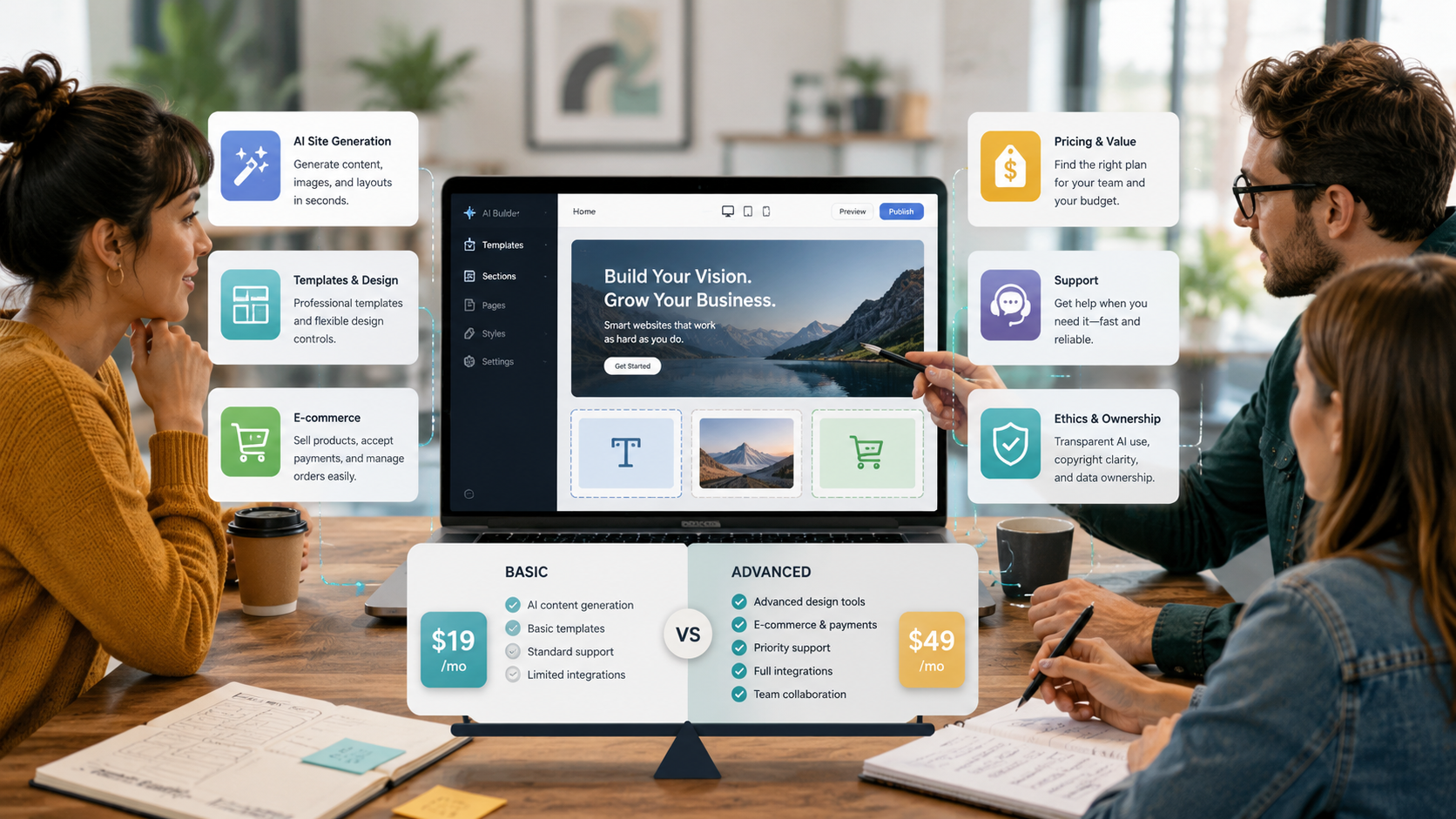
Website builders with integrated AI tools eliminate the need to hire a designer or developer. That's not a minor convenience—that's $5,000-$15,000 in saved labor for your first site. Popular platforms like Hostinger and WordPress.com now include generative AI functionality that creates custom sites based on your business description, not just templated layouts.
The efficiency gain is real: instead of spending weeks collecting design feedback, you get a functional website in hours. But efficiency only matters if the end result converts visitors into customers.
What to Look For: Templates, Functionality, and AI Quality
Most modern website builders offer thousands of pre-designed templates organized by industry—fashion, tech, marketing, e-commerce. The best ones have functionality-focused templates for specific use cases: e-commerce stores, blogs, portfolios, and appointment booking systems.
Here's what separates mediocre builders from strong performers:
- AI text generation tools: Simple, built-in copywriting assistance. Useful for product descriptions and landing page headlines.
- Full AI site generation: Upload your business information and the AI builds a complete site. Saves 10-15 hours of design work.
- Designer-made template library: Look for platforms with searchable, high-quality templates. Cheap builders have 50 templates. Good ones have 500+.
- Monetization and commerce tools: If you're selling anything, confirm the platform supports your business model before signing up.
The Trade-off: Cost vs. Capability
Not all AI features are available on entry-level plans. Ionos, known for excellent customer service, limits AI tools to higher-tier subscriptions. Adding e-commerce functionality also significantly increases costs. Before committing, calculate whether the feature set justifies the monthly expense.
Transaction fees on lower tiers can also erode margins. Some builders charge 2-3% on each transaction, which adds up quickly for small retailers. Always read the fine print on e-commerce pricing.
The Ethical Reality: Understand What You're Using
Most generative AI tools are trained on web-scraped content—often without creator consent or compensation. This has sparked lawsuits against companies like Stable Diffusion and raised real questions about copyright and attribution.
Before you adopt an AI builder, understand these implications:
- Many jurisdictions don't allow copyright claims on AI-generated work. If your business depends on owning unique content, this matters.
- Review your builder's ethical practices. Do they disclose how their AI was trained? Do they respect opt-out requests from content creators?
- Consider reputational risk. Using AI to generate entire sites is efficient, but some industries (professional services, creative fields) may penalize you for appearing generic or inauthentic.
The reality: use AI as an accelerant, not a replacement for your voice. An AI-generated homepage should be customized with your actual business story, not published as-is.
Building Your Evaluation Checklist
When testing a website builder, don't rely on marketing claims. Most platforms offer free trials or freemium plans—use them.
Evaluate in this order:
- Does the AI generate sites that look professional in your industry?
- Can you easily customize the AI output without coding?
- Does customer support respond within 24 hours? (This matters more than you think.)
- What are the actual transaction fees and add-on costs for your use case?
- Can you export your site or migrate platforms if you outgrow the tool?
Platform Strengths in 2026
For AI-first builders: Hostinger and WordPress.com lead in AI site generation. Both platforms integrate collaborative AI builders that create unique layouts—not just filling in templates with your text.
For service-based businesses: Ionos prioritizes customer service and includes 17,000 stock images, professional email addresses, and portfolio-focused templates. The trade-off: limited AI on lower plans.
For e-commerce: Confirm your platform supports your payment processor and shipping integrations before signing up. Not all builders handle complex inventory management equally.
The Practical Next Step
Stop evaluating in the abstract. Pick two platforms, sign up for free trials, and build a test site for your actual business. Spend 2-3 hours on each. Note which AI features actually save time and which feel like gimmicks. Pay attention to customer service quality by asking support one real question.
The platform that makes you feel like less work is the right one. For a small team, that efficiency compounds into real competitive advantage.